


 >
> Digital Transformation in Pharma: Benefits, Challenges & FAQs

Digital Transformation in Pharma Explained: Key Takeaways
- Digital transformation is essential to staying competitive in pharma
- Technologies like IoT-enabled instruments, cloud platforms, and FAIR data standards are driving real change
- Many pharma organizations face internal roadblocks due to disconnected infrastructure and inconsistent data
Did you know that bringing a new drug to market is more costly than ever, with R&D expenses now averaging over $2 billion for each approved compound?
As costs climb and timelines shrink, digital transformation is playing a critical role in helping pharma companies stay competitive and innovate faster.
Digital transformation in pharma is all about using technology to optimize operations, make better use of data, and speed up drug development from discovery all the way through to launch.
In this article, we will:
- Explore the key drivers behind digital transformation in the pharma industry
- Highlight the core technologies enabling this shift
- Cover the challenges holding this transformation back
ZONTAL can help you drive digital transformation in pharma.

Key Drivers of Digital Transformation in the Pharma Industry
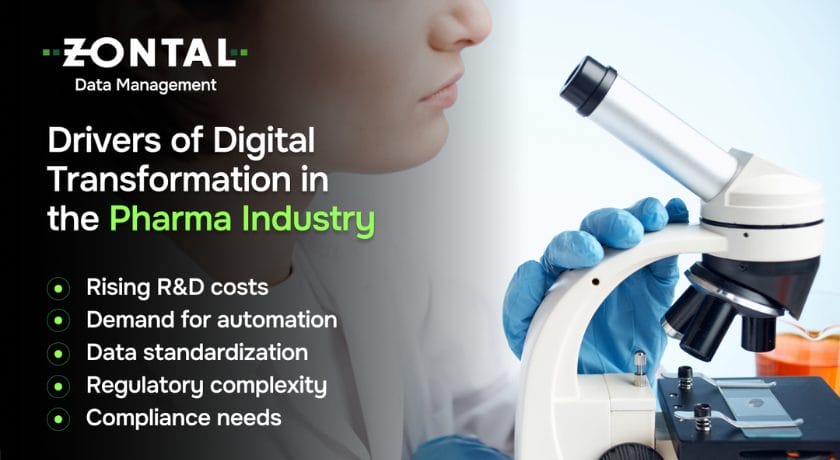
Digital transformation in pharma is being driven by rising R&D costs, growing demand for automation, and the pressure to keep up with complex regulatory requirements.
1. Rising R&D Costs and Time-to-Market Pressure
Drug development is becoming increasingly expensive, with R&D costs continuing to rise across the industry.
At the same time, pressure is mounting to accelerate time-to-market to maintain competitive advantage and respond to unmet medical needs.
Digital transformation enables:
- Faster candidate selection through AI-driven modeling and high-throughput screening
- Improved portfolio decision-making using integrated analytics
When pharma companies digitize workflows across discovery, development, and regulatory submission, they’re able to move faster, cut out inefficiencies, and make smarter, data-driven decisions much earlier in the process.
2. Demand for Automation and Data Standardization
Modern pharmaceutical R&D produces enormous volumes of data across instruments, labs, and global sites.
However, much of this data remains locked in siloed or proprietary formats, making it difficult to extract value or apply at scale.
This has made automation and standardization essential to improving operational efficiency and enabling digital maturity.
Digitally mature organizations benefit from:
- Automated data capture which reduces manual errors and improves data accuracy
- Streamlined tech transfer between R&D and manufacturing, made possible by standardized data structures and consistent metadata
- AI/ML readiness, as harmonized, high-quality data is essential for advanced modeling, predictive insights, and real-time decision support
Importantly, data standardization aligned with the FAIR data principles (Findable, Accessible, Interoperable, and Reusable) is now recognized as a foundation for long-term data utility, regulatory compliance, and scientific innovation.
3. Regulatory Complexity and Compliance Needs
Pharma companies are subject to stringent regulations, such as FDA 21 CFR Part 11, GxP, and ISO 17025, that require complete traceability, secure recordkeeping, and constant audit readiness.
Yet many legacy systems lack the capabilities to meet these demands, forcing teams to rely on manual workarounds that increase risk and inefficiency.
Digital transformation enables organizations to:
- Automate documentation, easing the administrative burden and reducing human error
- Maintain complete audit trails and electronic signatures, supporting ALCOA+ compliance for data integrity
- Enhance inspection readiness, thanks to centralized, validated, and easily retrievable digital records
With regulatory expectations continuing to rise, digital infrastructure is no longer optional; it’s critical to sustaining compliance and avoiding costly disruptions.
Core Technologies Powering Pharma Digital Transformation
A few key technologies are driving digital transformation in pharma, helping teams work smarter, move faster, and get more value from their data. These include:
1. Connected Lab Systems and IoT-Enabled Instruments
Existing labs are increasingly equipped with IoT-enabled instruments and connected systems that capture and share data in real time.
This connectivity allows devices, from chromatography units to bioreactors, to automatically send data to centralized platforms.
The result is less manual entry, fewer errors, and the ability to monitor lab operations remotely and more efficiently.
2. Cloud-Based Scientific Data Management Platforms
Cloud platforms are central to digital transformation because they offer scalable, secure, and centralized data environments for storing, analyzing, and sharing scientific data.
These platforms enable:
- Real-time collaboration across global sites
- Long-term data preservation
- Built-in compliance and auditability features
They also simplify integration with analytics tools and machine learning pipelines, accelerating R&D and regulatory workflows.
3. FAIR Data Principles, Metadata Standards, and Interoperability
Applying the FAIR data principles helps ensure that scientific data is easy to locate, understand, and reuse, whether by humans or machines.
In the pharmaceutical industry, interoperability is especially important, as seamless data integration across platforms is key to enabling AI, predictive modeling, and efficient regulatory submissions.
To support this, organizations are increasingly standardizing metadata and adopting open formats like AnIML and Allotrope.
These practices prevent data from being trapped in proprietary systems and lay the groundwork for long-term reuse, scalability, and regulatory compliance.=
Looking to transform your pharma workflows?
Challenges Slowing Down Pharma Digital Transformation
Despite growing momentum, some persistent challenges continue to slow digital transformation in the pharmaceutical industry, including:
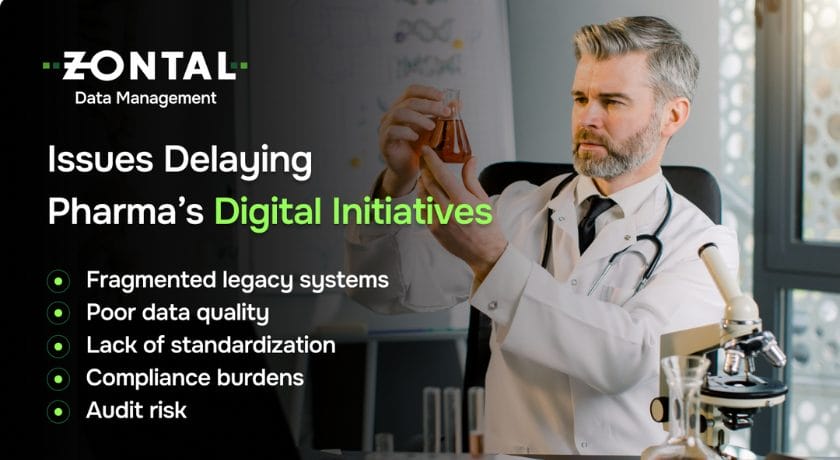
1. Fragmented Legacy Systems
Pharmaceutical organizations often operate with multiple disconnected LIMS, ELNs, CDSs, and proprietary databases, many of which are inherited through mergers or developed in silos.
These systems:
- Use incompatible formats and metadata schemas
- Lack integration layers like APIs, making data exchange cumbersome
- Create operational inefficiencies and inhibit digital automation
According to the recent ISPE Pharma 4.0™ Survey, many digital initiatives remain at the pilot stage, with legacy infrastructure and poor system interoperability cited as top constraints to scaling transformation.
2. Poor Data Quality and Lack of Standardization
Unstructured, incomplete, or manually recorded data remains common across lab systems. Specific issues include:
- Non-standard units (e.g., “mg/mL” vs. “µg/µL”)
- Missing timestamps, analyst attributions, or version control
- Inconsistent use of taxonomies or ontologies that prevent semantic search and AI application
These inconsistencies not only reduce data reliability but also obstruct semantic search, automation, and AI-driven analysis.
The 2024 Healthcare Digital Transformation Report highlights data standardization gaps as a persistent issue, particularly in quality control and regulatory environments, where inconsistent formats delay analytics and decision-making.
3. Compliance Burdens and Audit Risk
Strict regulatory expectations, the FDA’s 21 CFR Part 11, GxP, and ISO 17025 among them, demand complete, traceable, and tamper-proof data records. But many legacy systems:
- Lack secure audit trails or electronic signatures
- Depend on manual generation of submission documentation
- Fail to meet ALCOA+ principles for data integrity
How ZONTAL Supports Digital Transformation in Pharma
At ZONTAL, we don’t just digitize processes; we reshape how data flows, connects, and delivers value across the lab and beyond.
By turning scattered data into a real asset, we help pharma teams work more efficiently, stay on top of compliance, and make smarter calls from lab to launch.
1. A Unified Platform for R&D and Manufacturing
ZONTAL brings all your scientific data into one place, whether it’s from early-stage research or manufacturing.
By unifying data across the product lifecycle, it eliminates silos and ensures everyone’s working from the same high-quality information.
2. Streamlined Workflows Across Teams and Instruments
With ZONTAL, digital workflows actually flow. It connects data from instruments, lab systems, and teams, helping you move faster, reduce manual steps, and keep everything in sync, from experiments to QA reviews.
3. Built-In Metadata and FAIR Compliance
ZONTAL takes care of the heavy lifting by automatically tagging data with structured metadata, so it’s always FAIR. That means your data’s not just easier to manage; it’s ready for analytics, audits, and AI.
4. Easy Integration with ELNs, LIMS, and More
No need to rip and replace. Our platform integrates seamlessly with your existing ELNs, LIMS, and lab instruments, so you can modernize without disrupting your current setup.
Need a smarter way to manage your scientific data?
Digital Transformation in Pharma: FAQs
What is digital transformation in pharma?
Digital transformation in pharma is the strategic process of integrating technologies like AI, cloud, IoT, and data analytics across the drug lifecycle, from R&D to manufacturing and patient engagement, to:
- Boost efficiency
- Accelerate innovation
- Cut costs
- Shift from manual processes to smarter, data-driven operations
Why does digital transformation in the pharma industry matter?
Digital tools can help pharma teams move faster in R&D, cut down on manual errors, and make better use of their data.
They also simplify compliance and help bring new products to market more quickly.
What’s getting in the way of digital transformation in the pharma industry?
A big hurdle is dealing with outdated, disconnected systems and inconsistent data.
Add strict compliance rules, and it’s no surprise many teams are still stuck with manual workarounds that slow everything down.
What kinds of technologies are driving digital transformation in the pharma industry?
Think connected lab instruments, cloud-based platforms, automated workflows, and tools that support FAIR data.
These technologies help teams break down silos, work more efficiently, and make better decisions from discovery through to manufacturing.
Have more questions about digital transformation in pharma?


